

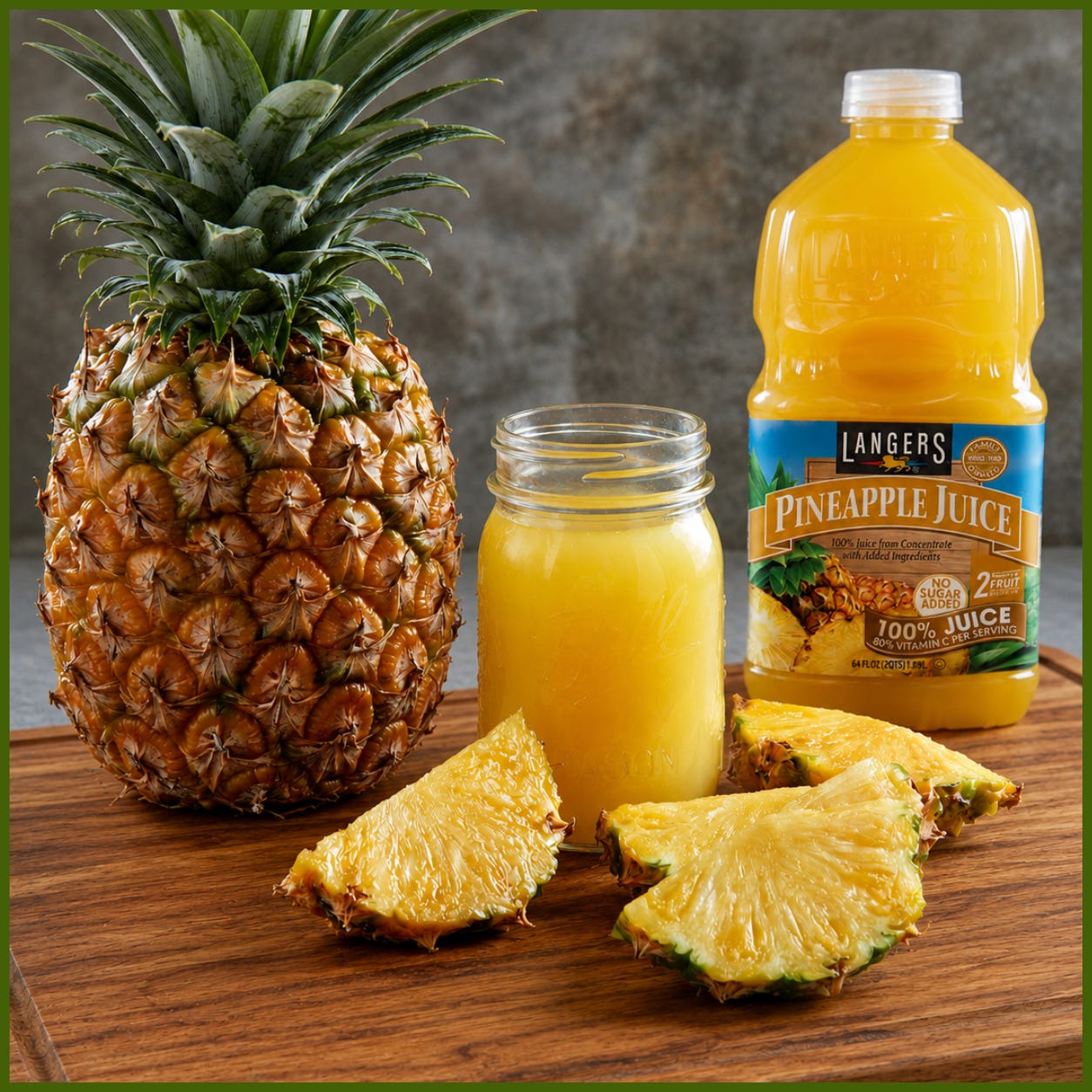
Have you ever brought home a whole pineapple, cut it up, and wondered what else you could make with it?
Pineapple really is the quintessential summer fruit. It’s bright, tangy, readily available, and there are so many ways to use it. And with the cost of groceries continuing to rise, I especially appreciate an ingredient that can stretch across several meals.
One pineapple can become part of a fresh fruit bowl, a smoothie, a frozen treat, grilled kebabs, or an easy summer dessert. You can serve it alongside dinner one night and use the rest to marinate chicken, pork, fish, or shrimp the next.
A pineapple marinade may be one of the easiest ways to put it to work. Mix everything together, pour it over your meat or seafood, place it in the refrigerator, and walk away for a little while. While you’re getting the rest of dinner ready, or simply getting on with your day, the pineapple is adding flavor and helping tenderize the food.
But there is one important thing to know: fresh pineapple works quickly. Leave something in the marinade too long, and instead of becoming tender, it can turn soft or even a little mushy.
Once you understand how to balance pineapple with savory ingredients and how long to let it work, it becomes much easier to use. So before we make the marinade, let’s talk about what makes a good pineapple marinade and why the timing matters.
What Makes a Great Pineapple Marinade?
The trick with pineapple is keeping the marinade from becoming too sweet.
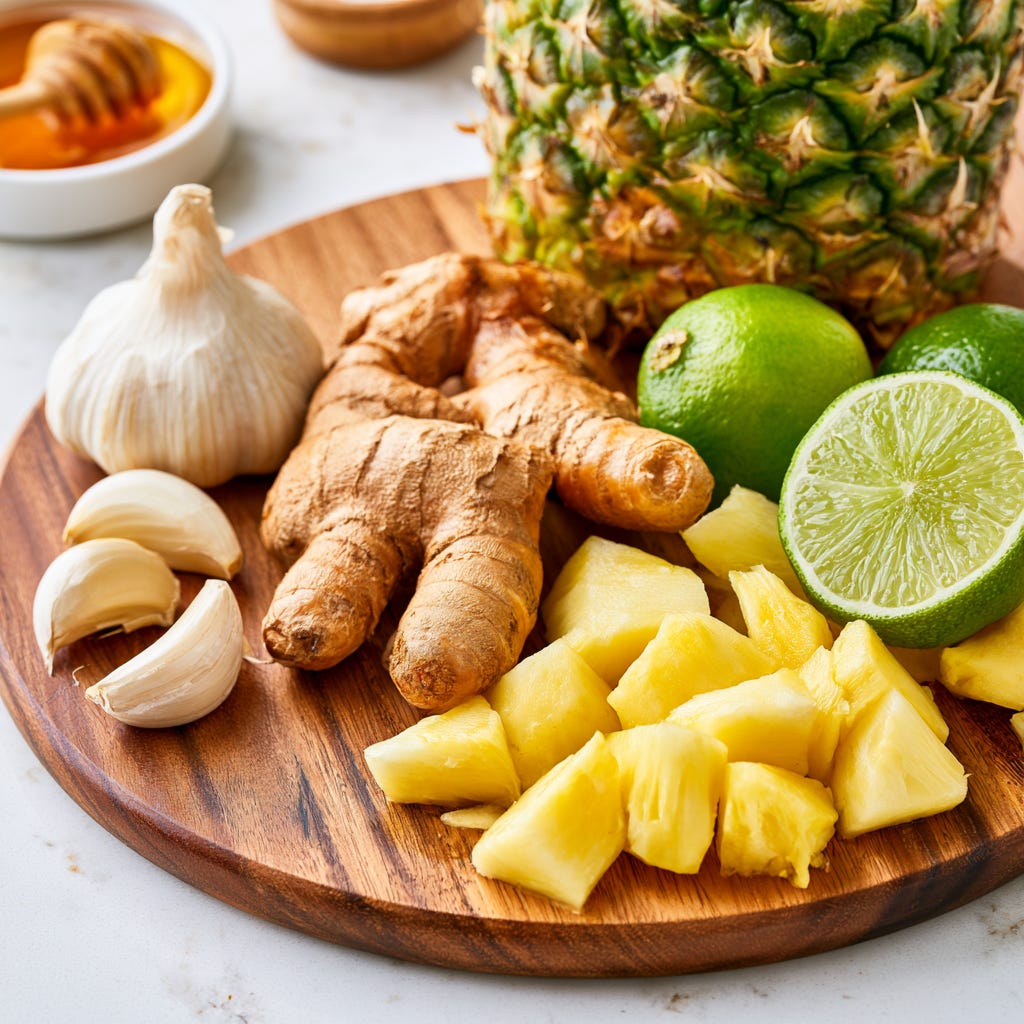
I like to balance it with garlic, fresh ginger, soy sauce, lime juice, a little honey, and oil. The soy sauce adds salt and savory depth, while the lime keeps everything bright. Garlic and ginger bring warmth, and the oil helps carry those flavors over the surface of the meat.
You still get plenty of tropical pineapple flavor, but the finished dish doesn’t taste like dessert.
Why Timing Matters
Fresh pineapple contains an enzyme called bromelain. It’s found throughout the fruit and in its juice.
When fresh pineapple comes into contact with meat, that enzyme begins breaking down some of the protein, especially near the surface. This is what gives fresh pineapple its tenderizing ability.
With the right amount of time, that can be a wonderful thing. It can help tenderize chicken, pork, and tougher cuts of beef while adding plenty of flavor.
Leave the meat in too long, though, and the outside may become overly soft, mealy, or even a little pasty after cooking.
This happens especially quickly with shrimp, fish, small pieces of chicken, and thin cuts of meat because more of their surface is exposed to the marinade.
Lime juice, vinegar, and other acidic ingredients can also affect the surface of meat, but bromelain works differently because it actively breaks down protein. That is why fresh pineapple isn’t a marinade I would leave working overnight.
Fresh vs. Canned Pineapple Juice
This is one of those kitchen details that can make a big difference.
Fresh pineapple juice contains active bromelain. Most canned pineapple juice has been heated during processing, and that heat largely deactivates the enzyme.
Canned juice will still give your marinade pineapple flavor, sweetness, and acidity, but it won’t tenderize the meat nearly as aggressively as fresh juice.
If you need a little more flexibility with your marinating time, canned pineapple juice can be a good option. When you’re using fresh pineapple or fresh juice, you’ll want to watch the time more closely.
So How Long Should You Marinate?
There isn’t one exact time that works for every pineapple marinade.
The amount of fresh pineapple, the thickness of the meat, and the size of the pieces can all affect how quickly the texture begins to change.
If your marinade contains a noticeable amount of fresh pineapple or fresh pineapple juice, these are good starting points:
Shrimp: 15–20 minutes
Fish: 15–20 minutes
Chicken: 30–60 minutes
Pork tenderloin: 1–2 hours
Flank or skirt steak: 1–2 hours
These times lean toward the cautious side, which is where I prefer to start. Once you’ve made a particular marinade and know how it behaves, you can adjust the timing if needed.
It’s also helpful to remember that many of the garlic, ginger, herbs, and spices in a marinade stay fairly close to the surface of the meat, while salt can move deeper. Once the pineapple has had enough time to do its job, leaving the meat in the marinade longer may change the texture more than it improves the flavor.
A Few Practical Tips
Pineapple marinades are easy to use once you know what to watch for:
✔ Keep the meat or seafood refrigerated while it marinates.
✔ Set a timer, especially when marinating seafood or smaller pieces of meat.
✔ Pat the meat or seafood dry before grilling so the surface can brown and caramelize.
✔ If you want to use some of the marinade as a sauce, set aside a clean portion before adding the raw meat.
✔ Never reuse marinade that has touched raw meat unless you bring it to a full boil first.
Now let’s put all of that into practice.
My Fresh Pineapple-Ginger Marinade works beautifully with chicken, pork, shrimp, or mahi-mahi. I’ll also show you how to reserve part of it and turn it into a quick finishing glaze.
The Island Spirit Kitchen is reader-supported. Paid subscribers enjoy weekly island-inspired recipes and full access to the growing recipe archive.
