

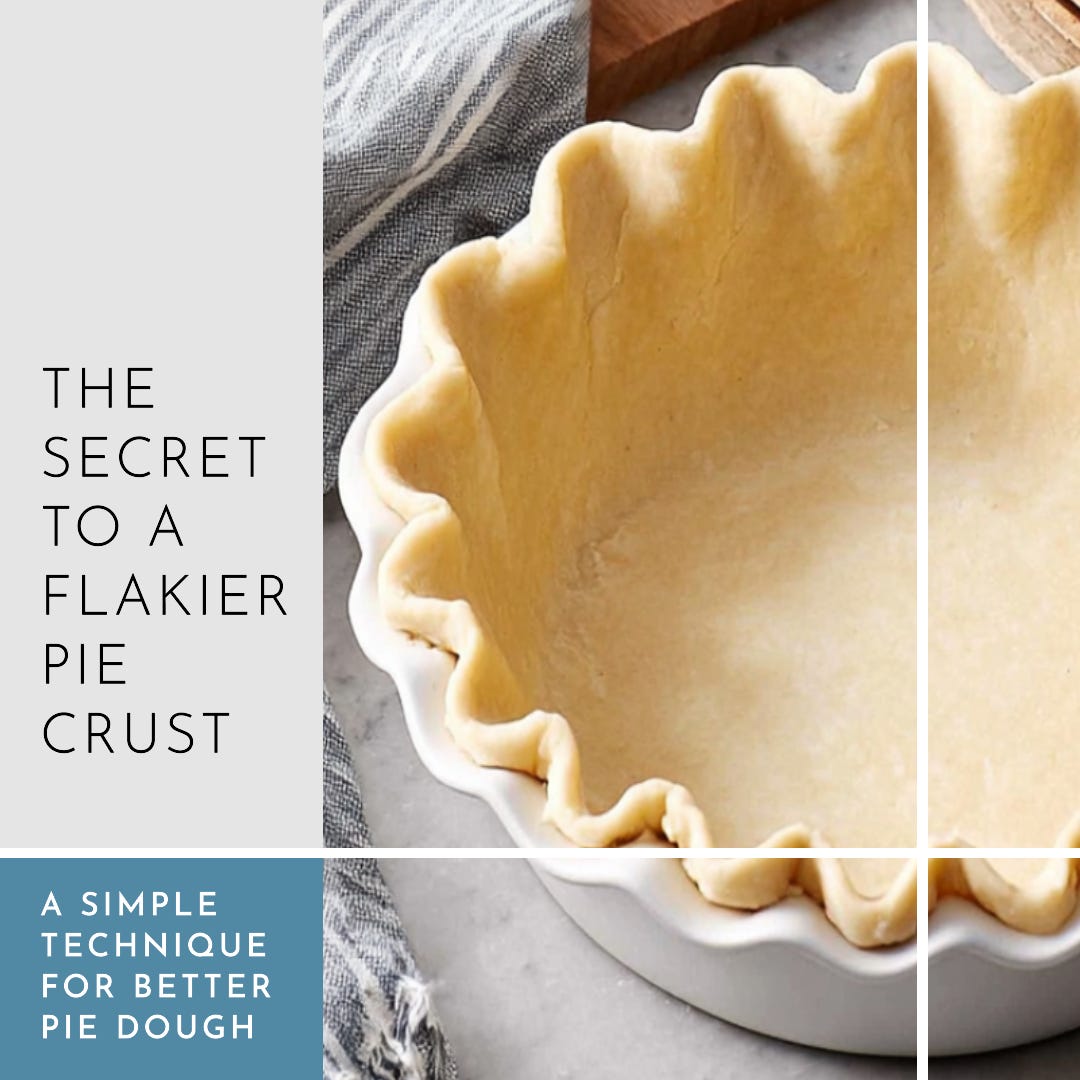
There’s something about pie dough that feels like it should be simple.
Flour, butter, a little liquid… and yet, it’s often the one thing that makes people pause.
It can feel too soft one day, too firm the next. Sometimes it rolls easily, and sometimes it fights you the whole way. And when it doesn’t turn out quite right, it’s easy to assume you did something wrong.
But most of the time, it’s not about doing more. It’s about understanding a few small details.
Store-bought crusts have their place, but homemade dough becomes much less intimidating once you understand how a few simple techniques can completely change the texture.
One of the simplest ways I’ve found to improve pie dough is with something people don’t usually expect: a small splash of rum.
Not enough to taste.
Not enough to change the recipe.
Just enough to make the dough a little easier to work with and a little lighter once baked.
Why Pie Dough Can Be Tricky
Pie dough is all about balance.
You need enough liquid to bring it together, but not so much that it becomes tough. And that’s where things can quietly go off track.
Water helps the dough form, but it also encourages gluten, which is what gives bread its chew.
In pie crust, that’s not what we’re after.
We want something tender. Something that flakes apart gently. Something that feels light when you cut into it.
And even when you’re careful, the dough can still end up a little tighter than you hoped.
What a Splash of Rum Actually Does
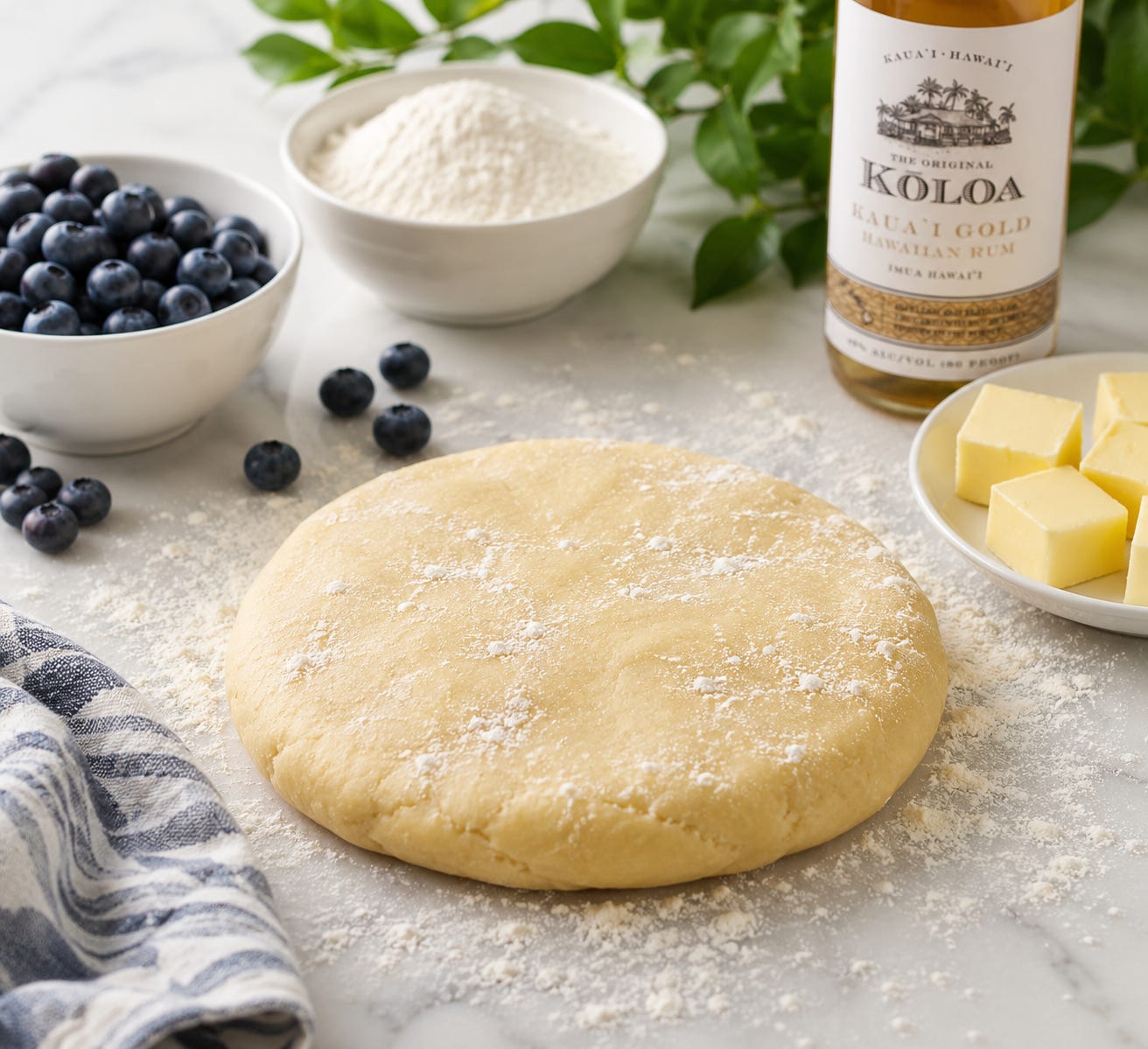
When you replace a small portion of the water with rum, the dough still gets the moisture it needs, but without developing quite as much gluten.
The result is a dough that rolls more easily, feels more forgiving to work with, and bakes into a lighter, flakier crust.
As the pie bakes, the alcohol evaporates quickly, helping create structure without heaviness.
This is also why some bakers use vodka in pie dough — alcohol helps create a dough that’s easier to handle while keeping the crust tender and flaky. I prefer rum because it offers the same texture benefits while bringing a little more warmth and softness to the finished crust.
Will You Taste the Rum?
You’re not adding enough rum for the crust to taste noticeably like alcohol.
What you may notice instead is a crust that feels lighter and more tender
It’s subtle — more of a background warmth than a distinct flavor — but it’s often the kind of detail people notice without quite realizing why.
Choosing the Right Rum for Pie Dough
A gold rum is usually the easiest place to start because it has a softer, more balanced profile that works beautifully with fruit pies. Kōloa Gold Rum in particular has gentle notes of vanilla and caramel that quietly support buttery crusts without overpowering delicate fruit flavors.
I like to use Kōloa Gold Rum for my pie doughs because it’s distilled from cane sugar rather than molasses, which gives it a cleaner, lighter character that works especially well in baking.
In pie dough especially, subtlety matters. You’re working with butter, flour, and delicate textures, so you want the rum to support the dough rather than compete with it.
If you prefer something more neutral, Kōloa White Rum also works well and still gives you the texture benefits.
A Small Shift That Makes a Difference
This is one of those techniques that doesn’t look dramatic on paper, but you feel the difference once you start working with the dough.
It becomes a little less frustrating, a little more forgiving, and a lot more approachable.
And sometimes that’s all it takes to make baking feel enjoyable again.
Below, I’ll show you exactly how I use rum in pie dough, along with a simple blueberry pie recipe you can come back to anytime.
Inside you’ll find:
My go-to pie dough
How much rum to use, and what to replace
A blueberry pie recipe that lets the crust shine
A few small tips that make a big difference
