

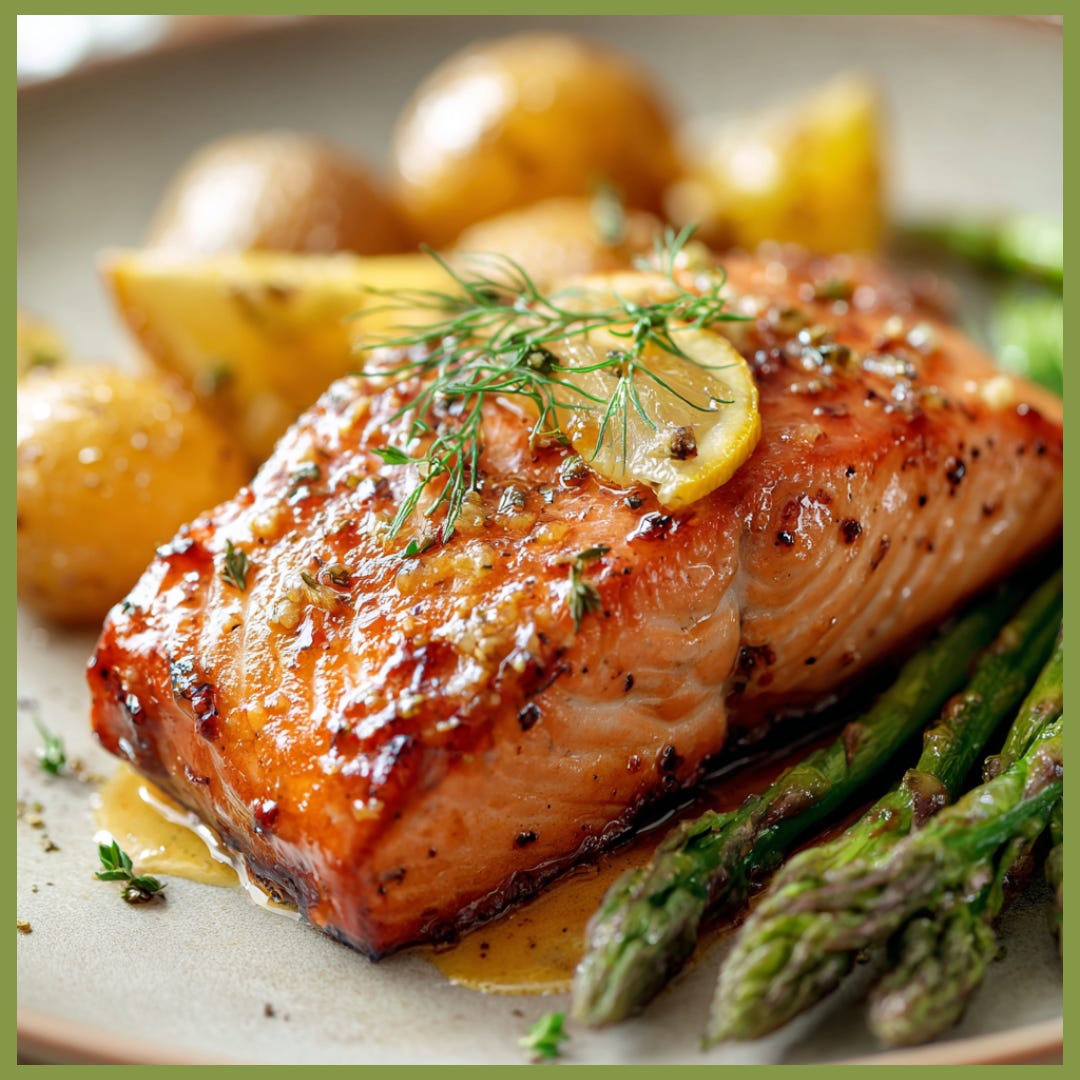
There’s a certain kind of meal many of us start craving as winter loosens its grip — something lighter, brighter, and fresher, but still substantial enough to feel like dinner. Not a salad-for-supper situation, and not quite comfort food either. Just thoughtful cooking that fits the moment.
This salmon is exactly that kind of meal.
It’s built from familiar ingredients and straightforward techniques, the kind you can return to again and again without needing a recipe card in front of you. Lemon brings clarity, mustard adds structure, fresh herbs lift everything at the end — and a small amount of rum helps the sauce settle into place naturally.
It isn’t flashy, and it isn’t meant to be. This is the kind of dish that earns its place in your regular rotation by being reliable, adaptable, and deeply satisfying.
Starting with Familiar Ground
At its heart, this dish is uncomplicated. A salmon fillet roasted at a steady temperature. A sauce whisked together in a bowl. No marinating, no stovetop juggling, no last-minute rush.
What makes it work isn’t complexity — it’s intention.
Lemon zest and juice brighten the fish without masking its natural richness. Dijon mustard provides gentle sharpness and definition. Olive oil smooths everything out, allowing the sauce to coat the salmon evenly rather than sit on the surface.
And then there’s the rum.
Used sparingly, it doesn’t read as sweet or boozy. Instead, it softens sharper edges, rounds out the citrus, and helps the flavors integrate into a unified whole. The result isn’t a “rum dish,” but a dish that feels complete and fully realized.
Why These Flavors Work Together
Understanding what each ingredient contributes makes cooking feel less mysterious and more intuitive.
Salmon brings richness and natural oils that welcome acidity and herbs.
Lemon cuts through that richness, keeping the dish light and focused.
Mustard adds structure and gentle heat, giving the sauce definition.
Fresh herbs lift everything at the end, keeping flavors clean and aromatic.
Rum ties it all together, adding warmth and balance rather than sweetness.
When these elements are layered thoughtfully, nothing competes — everything supports.
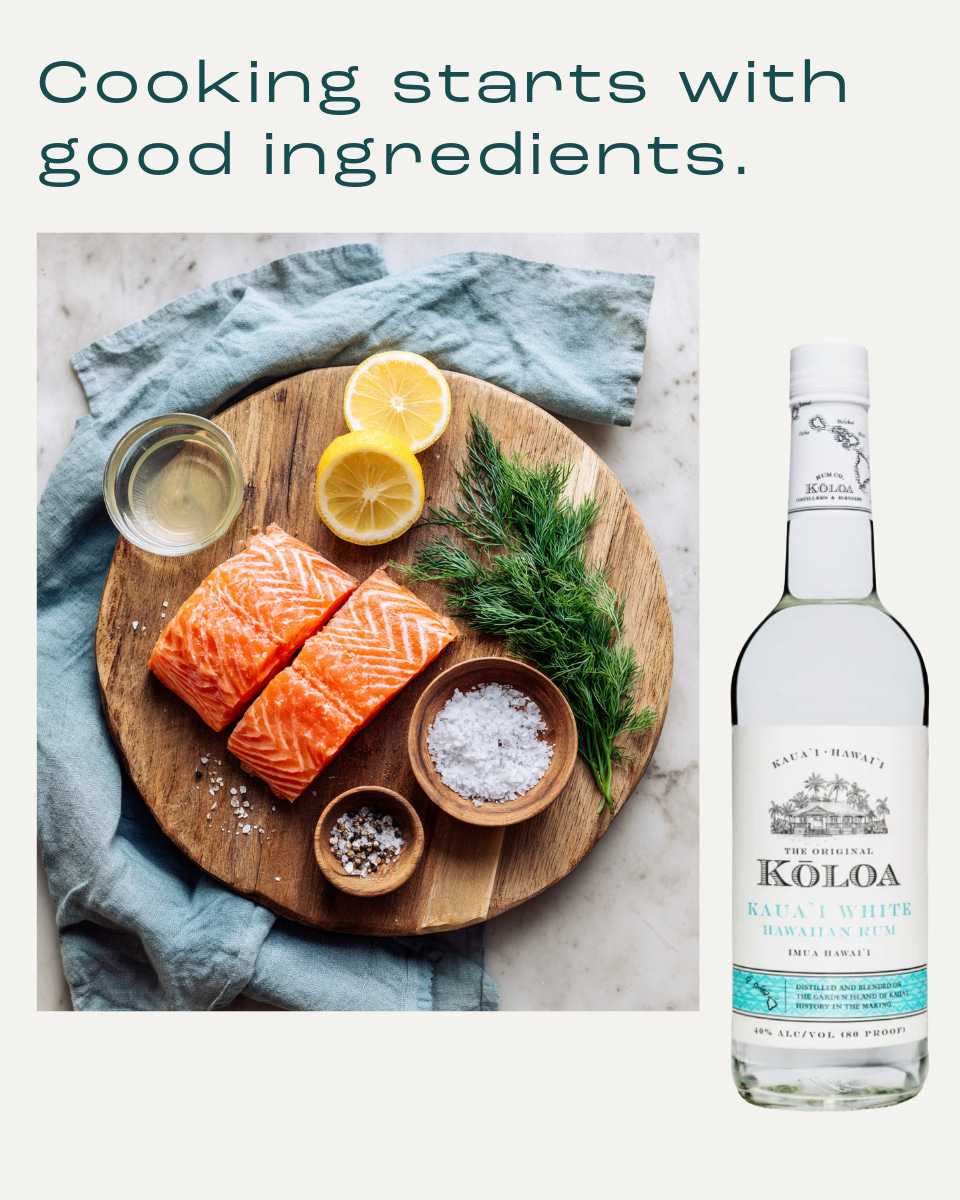
Why I Use Rum In The Recipe
Rum often gets associated with sweetness or bold, tropical flavors, but in cooking it serves a much more practical purpose.
In this recipe, rum functions similarly to cooking wine. It adds depth, softens transitions between ingredients, and helps the sauce develop as a cohesive whole. Because rum is distilled from sugarcane rather than grapes, it doesn’t introduce additional acidity. Instead, it contributes gentle warmth and subtle cane-derived notes that support the existing flavors.
That’s why I use Kōloa White Rum here. Its clean cane-sugar base integrates seamlessly into the sauce, enhancing the ingredients without competing with them. The rum doesn’t stand apart — it helps the dish develop a more refined, unified finish.
You don’t taste rum — you taste clarity and completeness.
For anyone new to cooking with spirits, this is an ideal place to begin. The amount is modest, the technique is straightforward, and the result demonstrates how a thoughtfully chosen ingredient can elevate a familiar dinner in a natural, approachable way.
Ingredient Guide: Choosing the Right Mustard
Mustard plays a subtle but important role in this dish. It provides structure and gentle heat while helping the sauce cling to the salmon.
These are the mustards I use in this recipe because they give the most balanced, reliable flavor. Links are included for convenience, and I may earn a small commission if you choose to purchase, which helps support The Island Spirit Kitchen.
Best choice: Dijon mustard — Maille Dijon Originale
Smooth, balanced, and moderately sharp, Maille Dijon Originale enhances this salmon beautifully without overpowering the other ingredients. Its acidity brightens the fish and pairs seamlessly with lemon, rum, and olive oil. Maille’s texture helps the glaze emulsify and cling to the salmon, giving you a cohesive, elegant finish.
This is the most reliable option for seafood and citrus-based sauces, and the best choice if you want a polished, restaurant-caliber result.
If you prefer something softer: Whole Grain Mustard — Maille Old Style Whole Grain
This version is slightly milder than Dijon and adds a pleasant, rustic texture thanks to the visible mustard seeds. It pairs wonderfully with the richness of salmon and the bright citrus notes, giving the sauce a rounder, more textured character. Choose this if you enjoy a more casual presentation and softer mustard presence.
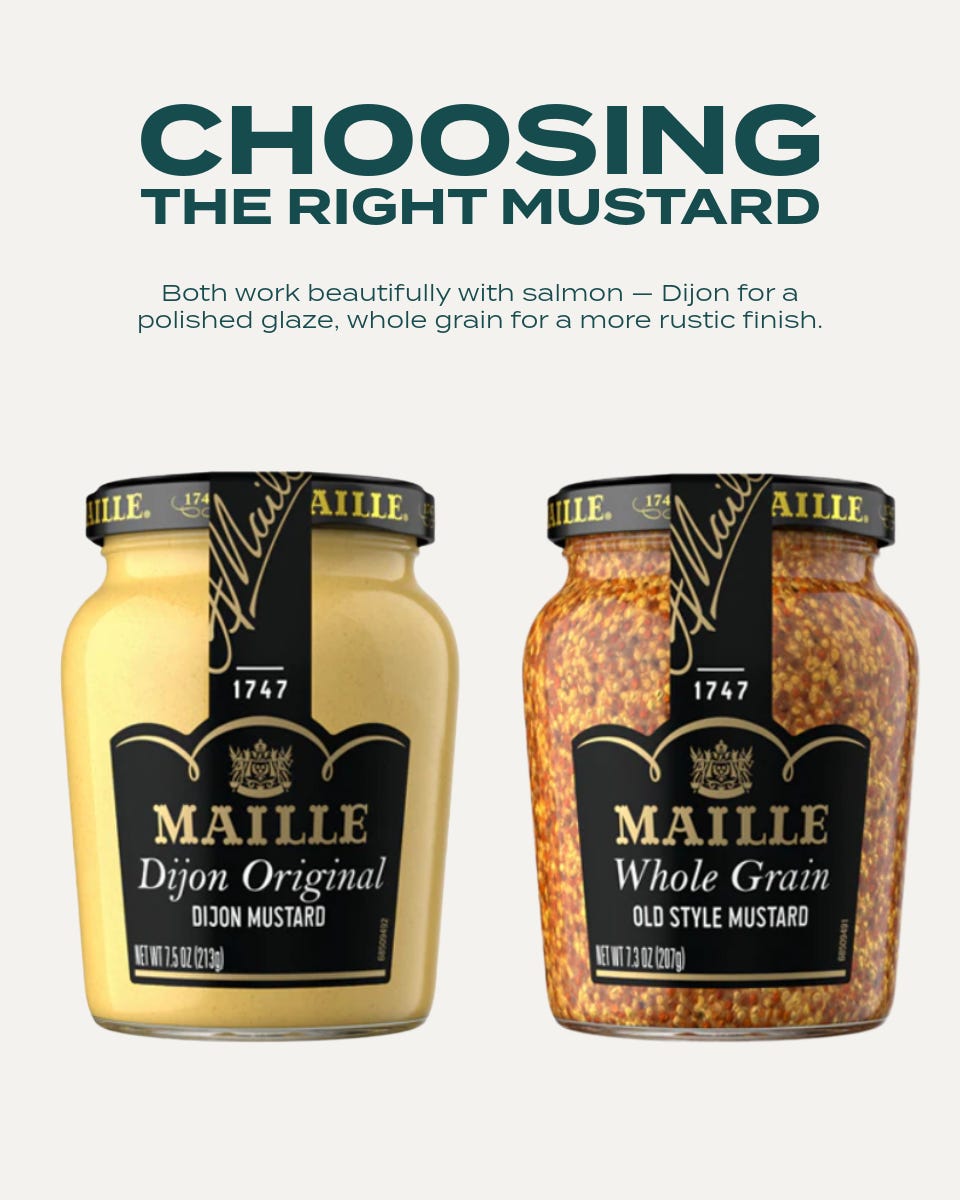
Flavor note: Whole grain mustard seeds release flavor gradually, so the sauce feels texturally interesting without overwhelming the fish.
What to avoid:
Yellow mustard is too acidic and one-note here, and honey mustard adds sweetness that throws off the balance.
Think of mustard as seasoning, not sauce.
Ingredient Guide: Choosing Your Herbs
Fresh herbs shape the final personality of the dish. Choose based on what you enjoy most.
For a bright, classic finish:
Dill — light, fresh, and naturally suited to salmon and lemon.
For a clean, familiar profile:
Parsley — mild and versatile, allowing the citrus and mustard to shine.
For a warmer, earthier note:
Thyme — subtle and savory, especially nice if serving with roasted potatoes.
Avoid rosemary here; it tends to overpower delicate fish.
The ingredients themselves are simple. What makes the difference is how they’re used — the proportions, timing, and small decisions that allow the flavors to settle into place naturally. Subscribers can access the full recipe and step-by-step guidance below.
