

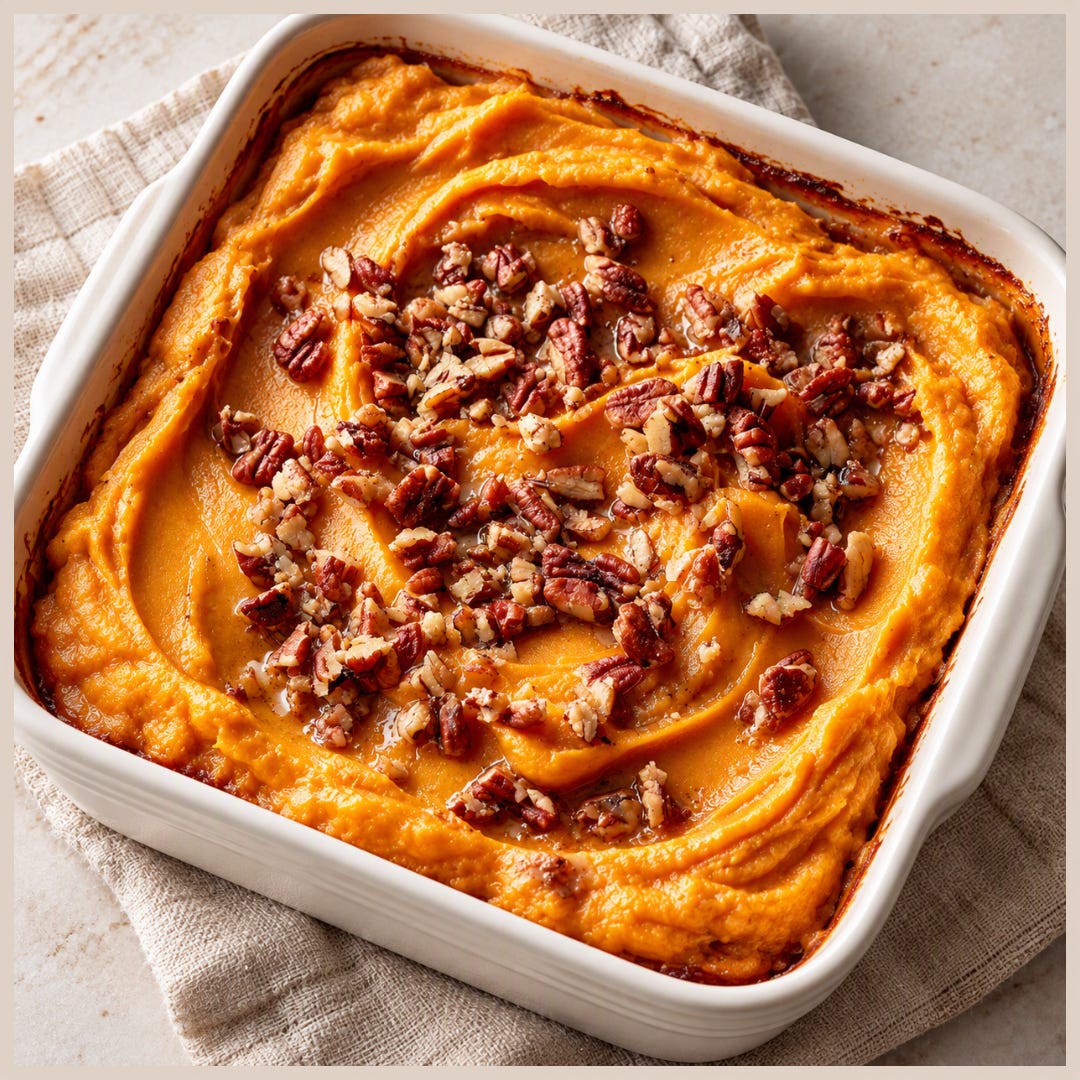
Before long, someone will ask, “What are you bringing?” and we’ll all be looking through recipes, trying to decide how ambitious we feel this year.
Sweet potatoes usually make the list, whether tucked into a pie, roasted as a simple side, or baked into the casserole someone requests every year. They’re comforting, familiar, and part of the holiday tradition, for some families, leaving them off the menu might require an explanation.
But even a familiar recipe can leave you with a question at the grocery store. It says “two pounds of sweet potatoes,” and there you are, looking at orange ones, pale ones, and a few with purple skin. Apparently, there was a follow-up question the recipe forgot to answer.
Can you use any of them? Sometimes, yes—but they won’t all cook up the same way. Some become soft and moist, while others stay denser and need a little help to turn into a creamy mash. Their sweetness varies, too, and how you cook them makes a difference.
Before the holiday cooking gets going, let’s sort out what to look for and how to bring out their sweetness. Then we’ll put it all to work in a coconut-ginger sweet potato bake with buttery pecans—something you might want to keep in mind when that “What are you bringing?” text arrives.
Start with what you’re making
Before choosing a sweet potato, think about where it’s going. Are you making a creamy casserole? Roasting pieces for dinner? Baking a pie?
The answer helps narrow down what to bring home.
Some sweet potatoes become soft and moist when cooked. Others stay denser and starchier, needing a little more liquid to turn into a creamy mash. Knowing that ahead of time can save you from wondering why a recipe looks different from the last time you made it.
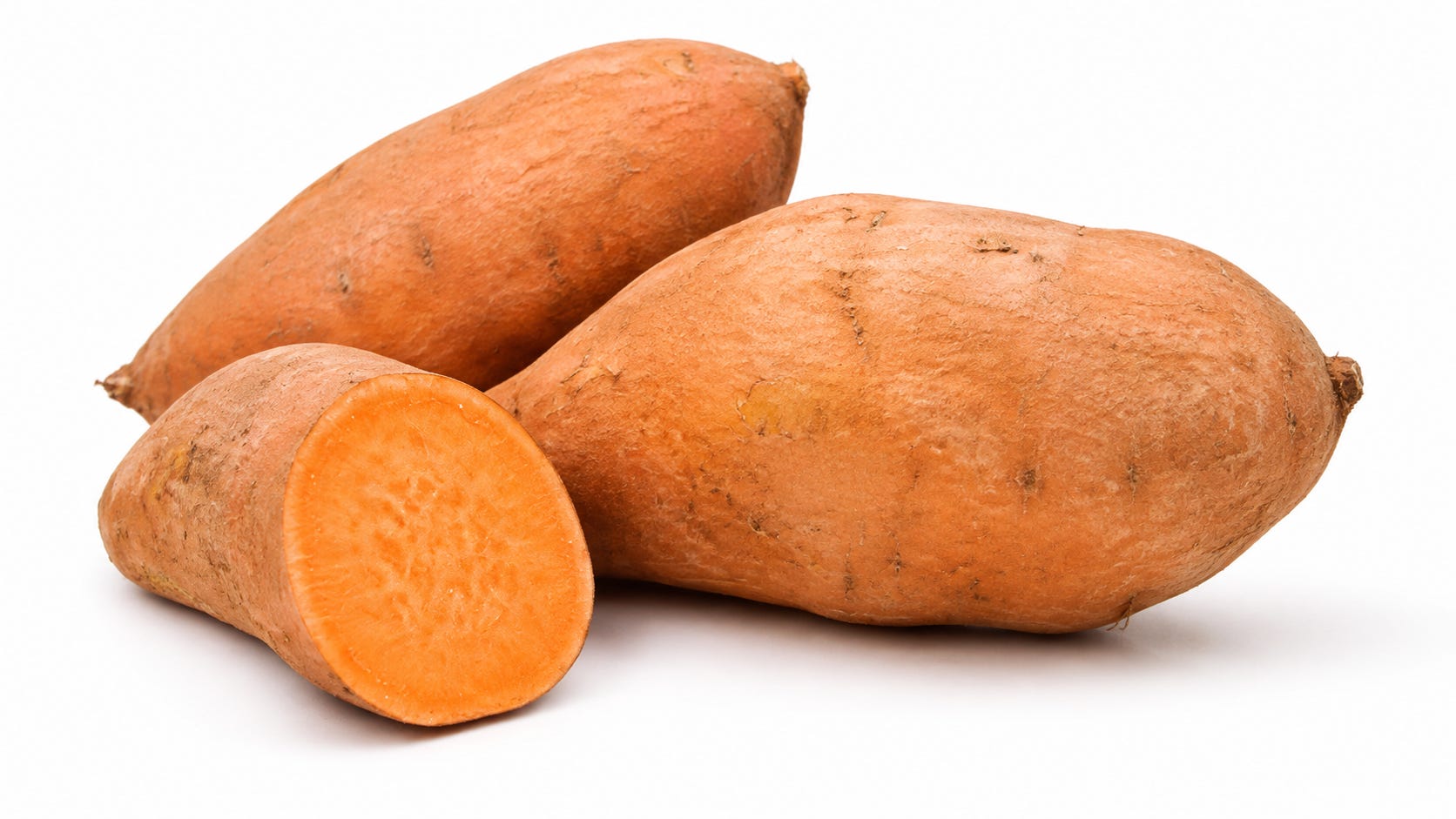
Orange-fleshed sweet potatoes
These are the familiar ones with copper or rose-colored skin and an orange center. Covington is one example.
They usually become moist and sweet when cooked, making them an easy choice for mashed sweet potatoes, casseroles, and pies. If you’re trying the recipe below for the first time, these are a good place to start.
.
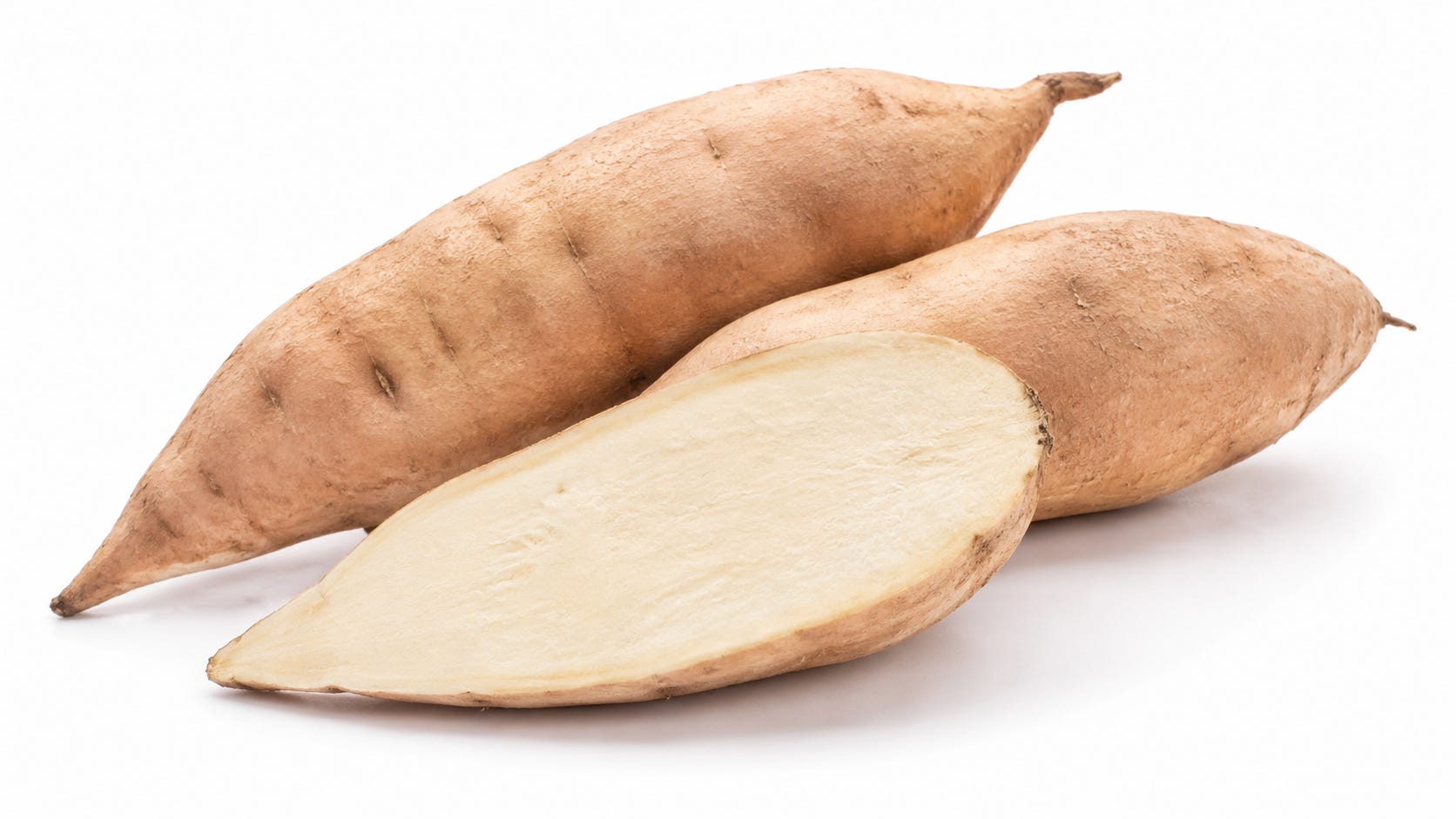
White-fleshed sweet potatoes
Look for pale tan skin and white or cream-colored flesh. Try them in soups and stews or cut into pieces for roasting.
When making a mash, add liquid gradually and check the texture. You’re looking for something creamy enough to spoon, with enough body to hold its shape.
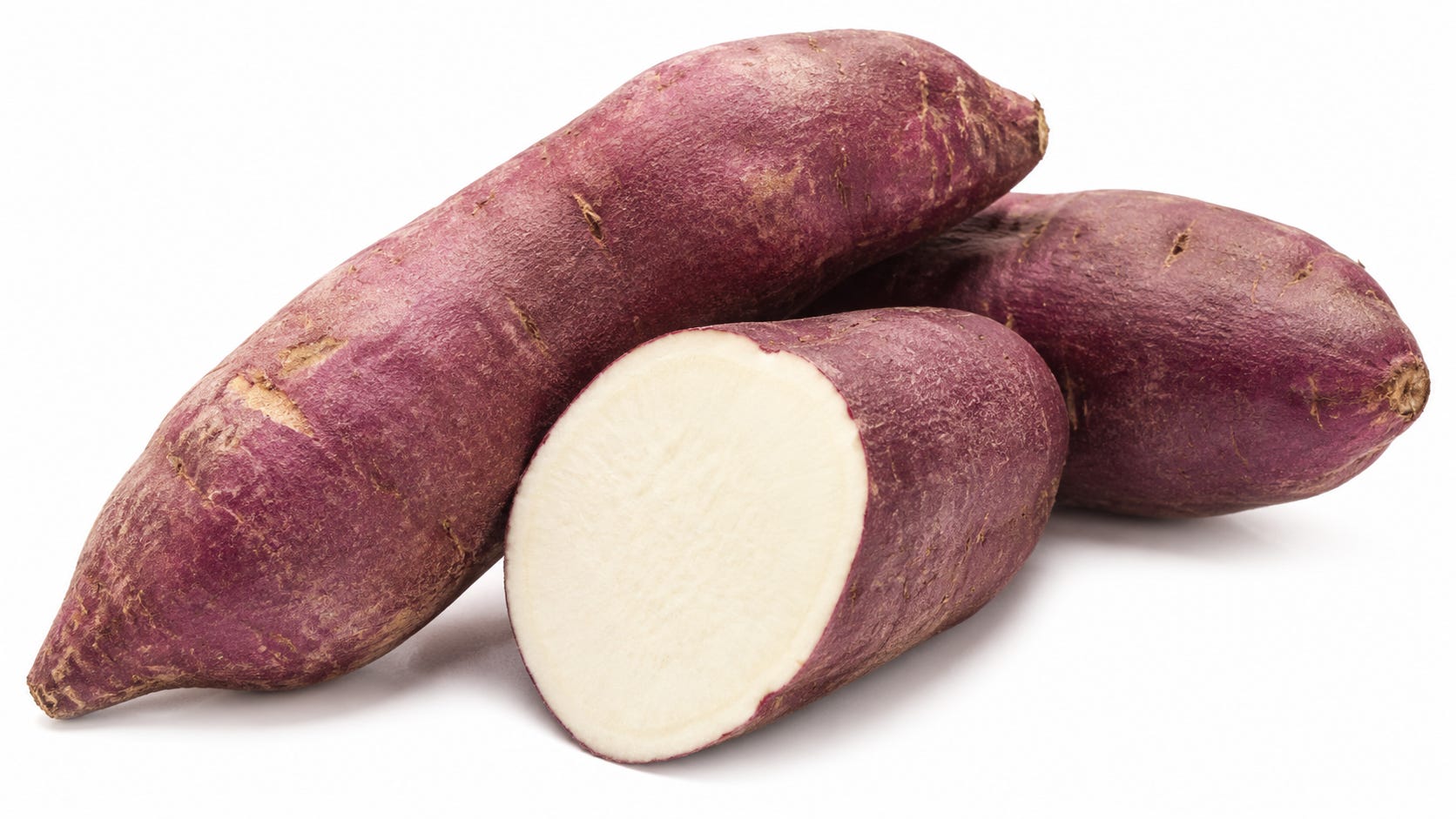
Japanese types, including Murasaki
Their reddish-purple skin can be misleading—the flesh inside is generally white or cream-colored.
These tend to be starchier and drier than orange varieties. They’re lovely roasted whole, and they can make a delicious mash with a little extra moisture.
Okinawan sweet potatoes
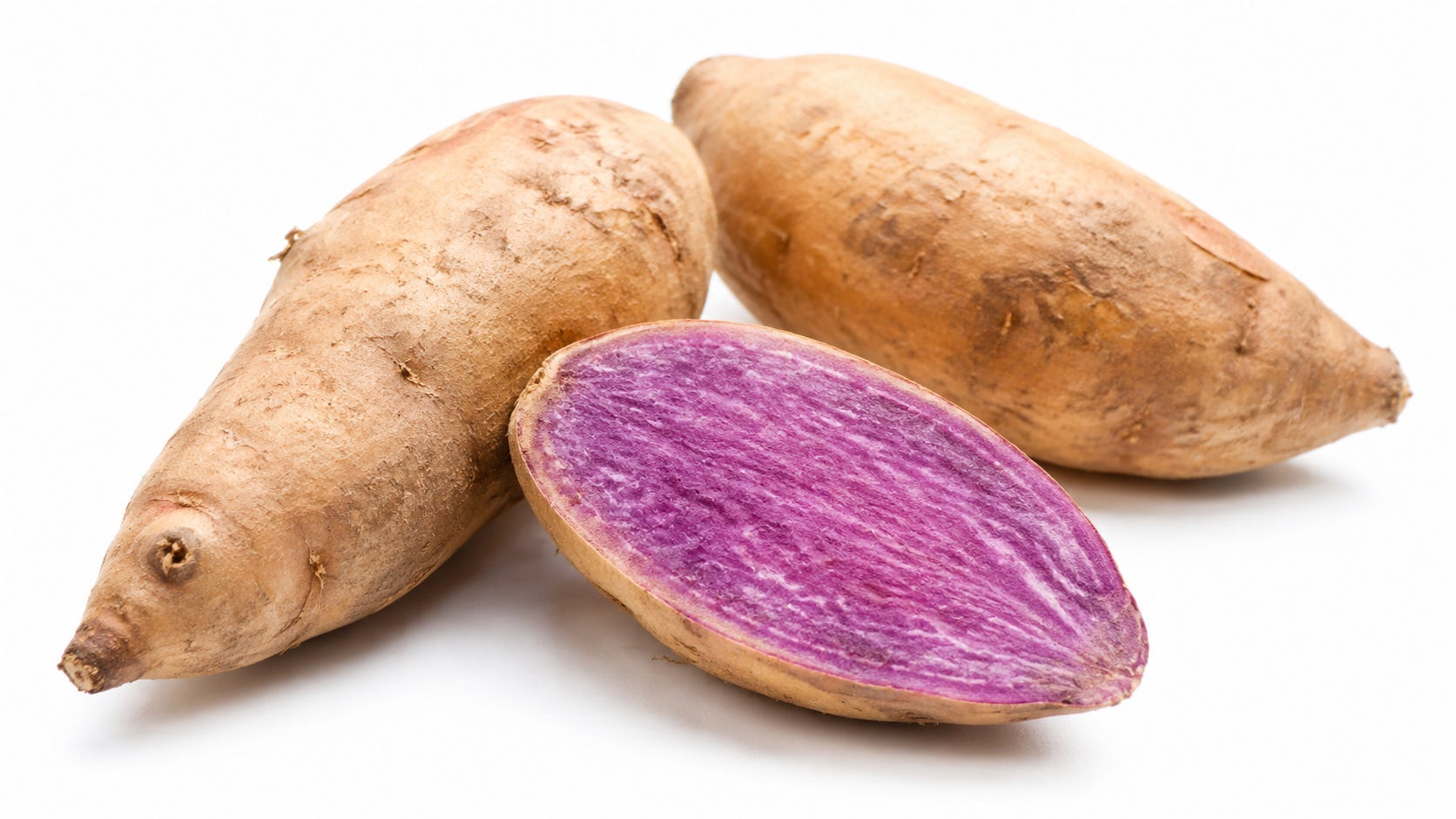
These have beige skin and a purple center. In Hawaiʻi, where sweet potatoes are known as ʻuala, Okinawan types are an important part of the local crop alongside traditional Hawaiian varieties.
Their starchy, often dry texture works beautifully with coconut milk. Give them enough time to become completely tender, then add liquid as needed when mashing.
Stokes Purple® sweet potatoes
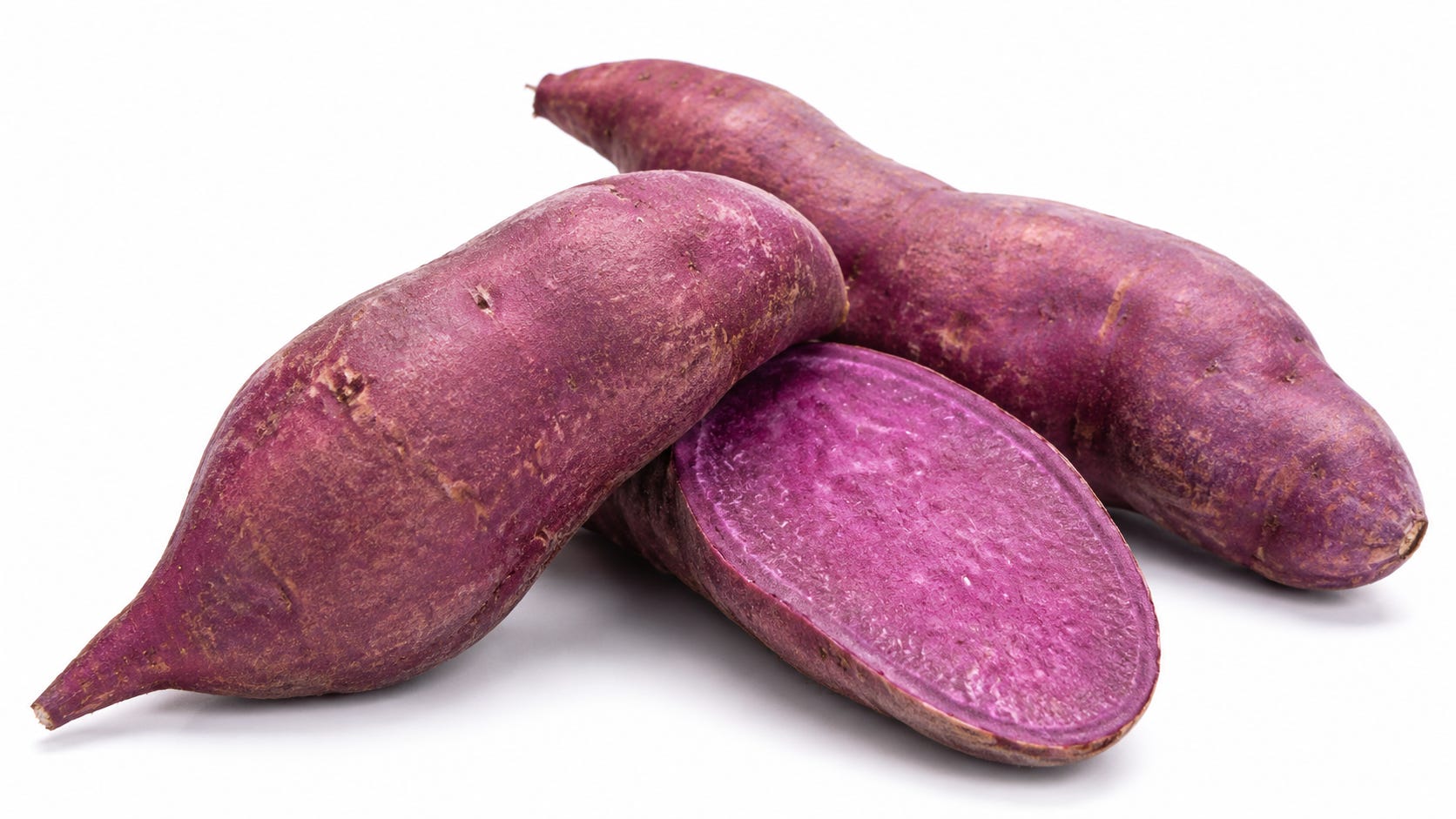
These are purple on the outside and inside, and they’re a different variety from Okinawan sweet potatoes.
They’re mildly sweet and starchy, with plenty of possibilities for roasting and mashing. If you’re choosing a purple sweet potato for a recipe, check which variety it calls for.
Culinary Tip: For cakes and quick breads, follow the variety specified when possible. Changing sweet potatoes can change the moisture in the batter, even when you use the same amount.
And while we’re sorting out names: the orange “yams” in many U.S. supermarkets are usually sweet potatoes. Ube is a true purple yam—a different ingredient altogether.
Some of the sweetness develops as they cook
Once you’ve chosen your potatoes, the next part happens in the kitchen.
Sweet potatoes contain starch and natural enzymes. During heating, an enzyme helps break some of that starch down into a sugar called maltose.
That means some of the sweetness you taste is developing while the potato cooks.
Gradual heating gives that process time to happen, which helps explain why a slowly roasted sweet potato can taste almost like dessert before you add anything. The variety and cooking conditions still matter, so every potato won’t turn out exactly the same.
For the bake below, we’ll roast the sweet potatoes whole before mashing them. Most of that oven time is hands-off.
The important part is checking the center. A knife should slip easily through the thickest section. If you have to push, give it more time. A center that’s still firm will make a smooth mash much harder to achieve.
Culinary Tip: Taste a little cooked flesh before adding anything sweet. You may find that butter, salt, or coconut milk brings the dish together without needing brown sugar.
A few things to notice at the store
Now that you know what the different kinds can do, choosing them gets easier.
Look for firm sweet potatoes without soft spots or signs of decay. When baking them whole, choose potatoes of similar size and thickness so they’re more likely to finish cooking together.
If the store identifies the variety, take a moment to read the label. Purple skin alone won’t tell you what’s inside.
Once home, keep raw sweet potatoes somewhere cool, dark, and ventilated. Prolonged refrigeration can affect their flavor and texture, so save the fridge for cooked leftovers.
Bringing it to the fall table
With the right sweet potatoes and a little patience in the oven, you have a good foundation for something worth sharing.
For this recipe, coconut milk adds creaminess, fresh ginger brings gentle warmth, and cinnamon gives it a familiar fall flavor. Buttery pecans add a little crunch to each spoonful. There’s also an optional touch of orange zest if you’d like a brighter finish.
It’s an island-inspired side dish made with ingredients you can find at an ordinary grocery store, something to serve with a family dinner now and keep in mind when the holiday menus come around.
The Island Spirit Kitchen is a reader-supported publication. To receive weekly articles, access the growing recipe archive, and support my work, consider becoming a paid subscriber.
