

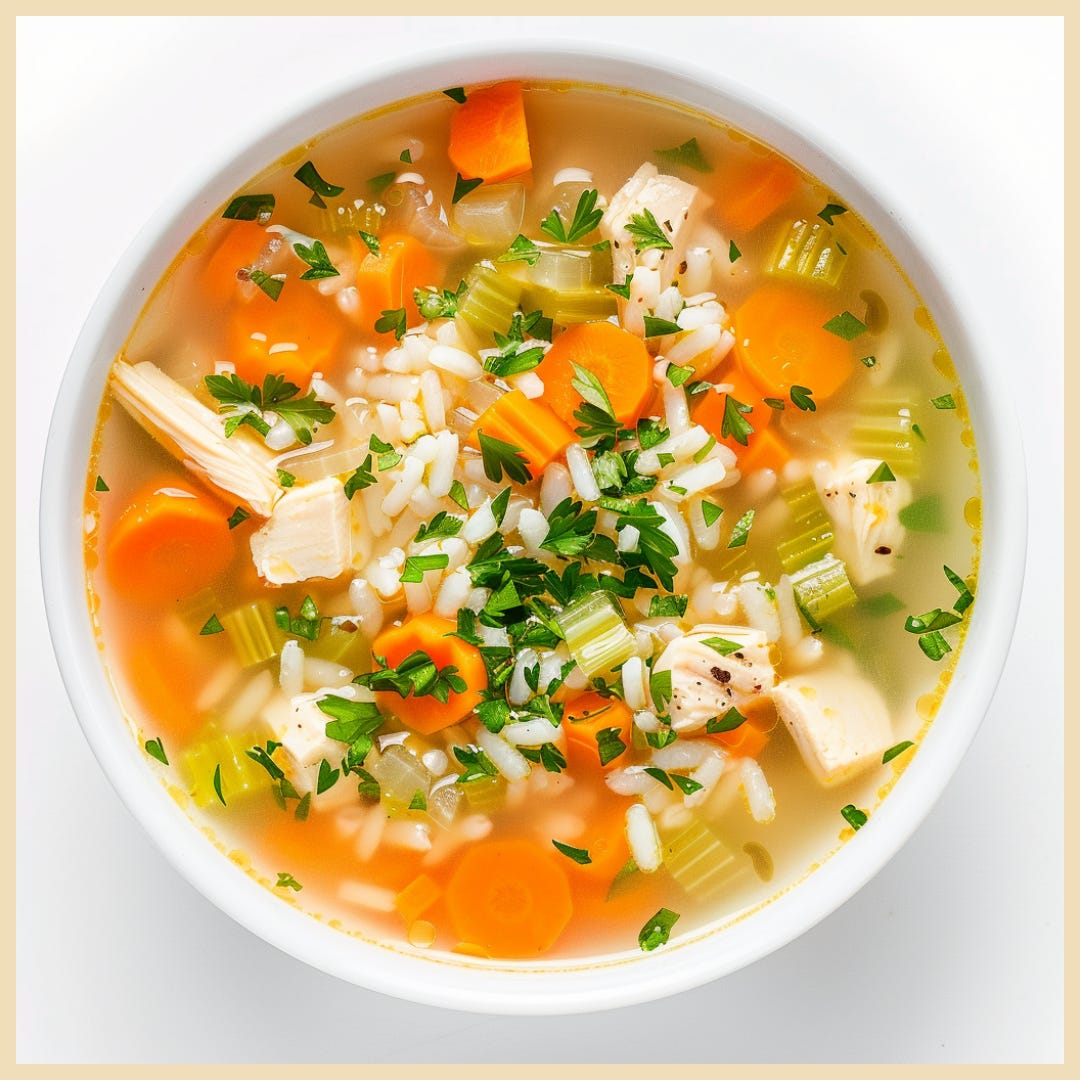
Chicken and rice soup is a dish most of us know by heart. It’s the kind of food you make when you want something steady and nourishing — when the evenings are still cool, when you’re feeling under the weather, or when you simply want a meal that feels clean and uncomplicated.
This is an easy, one-pot soup that comes together without much effort. Everything builds in the same pot, step by step, and it’s very forgiving if you move a little slower or faster than planned. The vegetables don’t need to be cut perfectly, the simmer doesn’t have to be exact, and there’s plenty of room to adjust seasoning as you go. It’s the kind of recipe you can make on a quiet evening, letting it cook gently while you move around the kitchen.
What I’m sharing here isn’t a new recipe, but a small adjustment in how the soup is built — using white rum as part of the cooking process itself.
I’ve found that when used early and in small amounts, rum behaves much like wine in classic cooking — not to change a dish, but to help it develop more fully from within.
Used this way, rum doesn’t announce itself. You won’t taste alcohol, and the soup won’t feel tropical or sweet. Instead, everything settles into place — the broth feels steady, the aromatics fully incorporated, and the entire pot more cohesive.
If you’ve ever wondered whether rum belongs in everyday cooking, this is a gentle place to explore that idea.
Why Rum Works in Savory Cooking
In cooking, alcohol isn’t added to make food taste like alcohol. It’s used because it helps dissolve and carry flavor in ways water and fat alone can’t.
That’s why wine shows up so often in soups and stews. White rum works on the same principle, but without acidity. In a gentle broth like chicken and rice soup, that difference matters. It adds depth without sharpening the flavor or changing the character of the dish.
Why Alcohol Is Used This Early
Alcohol evaporates at a lower temperature than water — about 173°F. Because it’s added at the beginning and allowed to simmer, the alcohol portion dissipates quickly.
What remains behind are the flavor-binding properties that help carry aroma through the broth. This process happens naturally as the soup cooks, helping the broth develop depth while preserving its familiar character.
The goal here isn’t to introduce something new. It’s to help familiar ingredients come together more naturally.
Choosing a Rum for Cooking
Because this technique is subtle, the rum needs to stay out of the spotlight.
A good cooking rum is:
unsweetened
clean-smelling
neutral enough that it won’t stand out
Cane sugar–based white rums tend to behave better in savory dishes than heavier styles, which can bring notes that don’t belong in a light soup. If a rum smells strongly of vanilla or sweetness straight from the bottle, those qualities will show up in your food.
Think of it the same way you’d think about cooking wine — you’re looking for balance, not personality.
Why I Use Kōloa White Rum in This Recipe
For this soup, I use Kōloa White Rum because it’s made from pure cane sugar and distilled in a way that keeps the flavor clean and quiet. It doesn’t carry heavy vanilla or sweet notes, which makes it especially well suited for savory cooking.
When added early in the cooking process, it integrates naturally into the aromatics and broth. Nothing stands out. Instead, it allows the broth and aromatics to develop smoothly, without introducing anything extra.
You don’t need much. Even a small amount helps the broth develop a smoother, more refined finish while keeping the soup true to its original character.
What This Changes - and What It Doesn’t
This isn’t about making the soup taste different. It’s about allowing the ingredients to express themselves more clearly.
The broth remains light. The vegetables remain familiar. The chicken remains the focus.
The difference shows up in how everything connects. Nothing feels separate or unfinished. The soup tastes fully developed, the way slow, careful cooking naturally allows it to become.
Below is the full Chicken & Rice Soup recipe, including:
exactly when the rum goes into the pot
how much to use
and the small details that keep the soup clean, balanced, and forgiving
This isn’t about reinventing a classic.
It’s about understanding one quiet step that helps familiar food taste more intentional.
Additional Notes & Variations
Rinsing (and Resting) the Rice
Rinsing the rice removes excess surface starch, which helps keep the broth clear.
If you have a little extra time, you can let the rinsed rice rest in fresh water for up to 1 hour before cooking. This brief soak helps the grains hydrate evenly, which can:
reduce starch release
keep the rice tender rather than gummy
maintain a lighter, cleaner broth
This step is helpful, not required. Rinsing alone works perfectly well.
Slow Cooker Option
This soup adapts well to a slow cooker with one adjustment.
Start the recipe on the stovetop through the point where the aromatics are softened and the rum is added and cooked down. Transfer everything to the slow cooker with the broth, seasonings, and chicken.
Cook:
on LOW for 4–6 hours, or
on HIGH for 2–3 hours
Add the rice during the final 45–60 minutes, or cook it separately and add just before serving. Finish with lemon juice and parsley as usual.
How to Store
Refrigerator: Store in an airtight container for up to 3 days. The flavor continues to develop overnight.
Freezer: Freeze for up to 3 months. Thaw in the refrigerator and reheat gently on the stove.
Tip: If freezing, slightly undercook the rice so it holds its texture when reheated.
Final Note
This is the kind of recipe that reminds me why simple food matters. A few familiar ingredients, treated with a little intention, can turn into something comforting and complete without trying too hard.
Using rum this way isn’t about changing what you love — it’s about understanding how small choices quietly refine the food we already make. Once you start thinking of it as a cooking ingredient rather than something reserved for drinks, it becomes a gentle tool you reach for when it makes sense.
I hope this soup finds its way into your kitchen on a cool evening, a slow weekend, or a day when you just need something steady and nourishing simmering on the stove.
Mahalo nui loa,
Nicole
The Island Spirit Kitchen